
Published
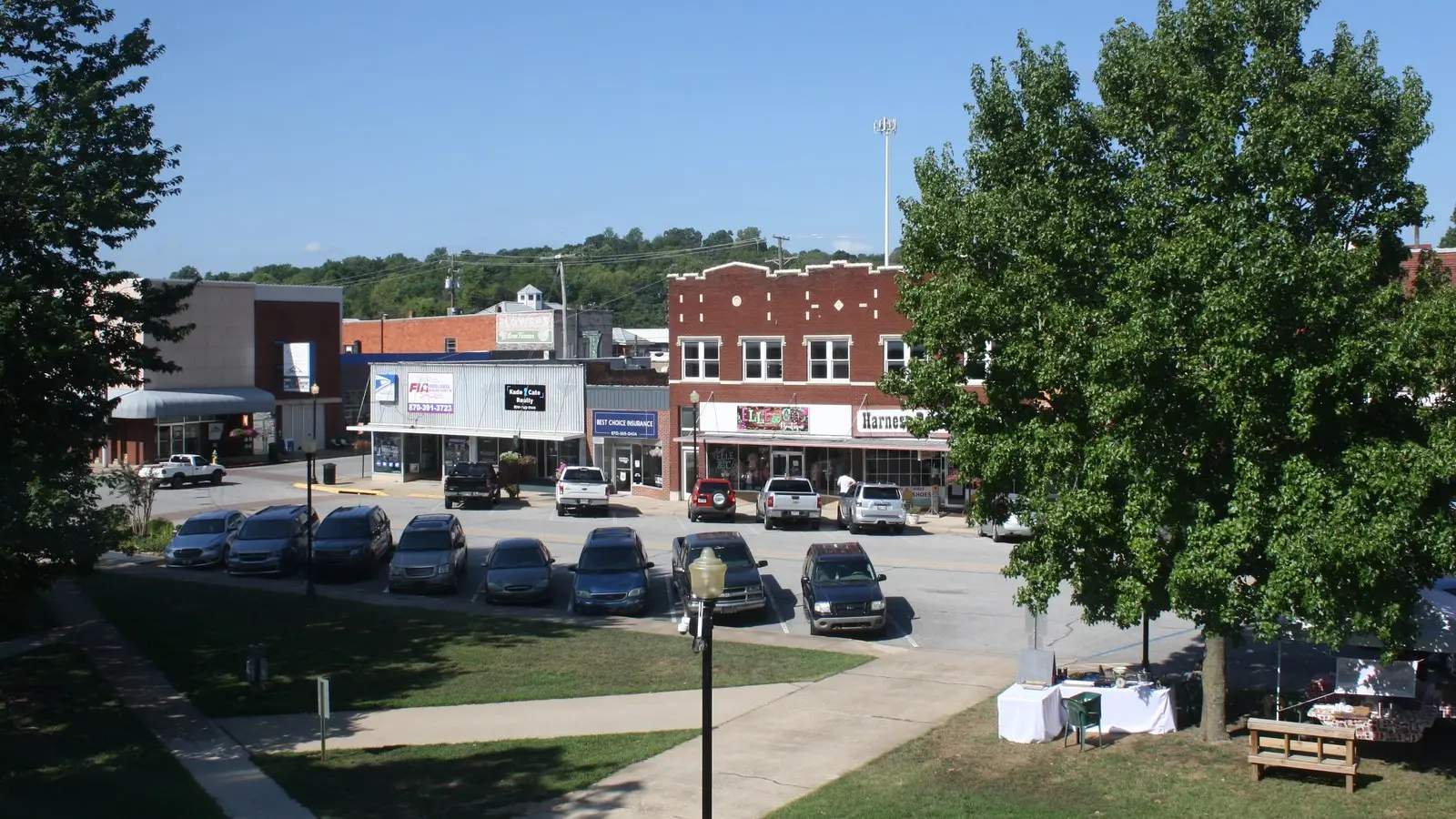
Downtown Harrison, Arkansas. Photo: Brandonrush, CC0, cropped.

Ask an owner in Harrison where their customers come from and you rarely get a tidy answer. Some of them live three blocks off the square. Some drive in from the smaller towns around the county because this is where the bank and the feed store and the dentist are. Some are passing through on 65 on their way to the river, and they will stop once, spend money, and never come back.
That mix is the whole reason radio still earns its place here, and it is also the reason radio by itself leaves money on the table. People in Boone County spend real time in the truck. They hear you. Then at some point they pick up a phone and look you up, and whatever they find decides whether the ad was worth anything. That second half is the part most local advertising plans forget to buy.
Key takeaways
- Radio works in a market like Harrison because driving is built into daily life here, not because the market is big.
- A schedule spread thin across too many stations and times teaches nobody your name. Concentration beats coverage in a small market.
- The ad creates the search. What the listener finds when they look you up decides whether the ad paid for itself.
- Pair the schedule with a correct business profile, a page that matches what the ad promised, and a way to catch the calls you miss.
- If your phone goes unanswered or your hours online are wrong, fix that before you buy a single spot.
Does radio advertising still work in a market the size of Harrison?
Yes, for the right kind of business. Harrison is a county seat with a real trade area, and people here drive to do almost everything. That driving time is the opening. Radio reaches them before they go looking, which is the one thing search cannot do, and a smaller market means your voice competes with fewer others.
The case against local radio usually starts with audience size, and in a town this size the number is never going to impress anybody. That is the wrong number to look at. What matters is how much of your actual trade area you can reach, how often, and how long you can keep doing it.
A business in a metro buys a sliver of a huge audience, and most of the people who hear the ad will never drive to that side of town anyway. Here it inverts. The people hearing you are the people who already pass your building. The waste that makes radio expensive in a big market mostly disappears in a small one.
The trade-off is patience. Radio is demand creation, not demand capture. It works on people who were not in the market this week and will be in six months, and it works by being familiar when that week finally arrives. If you need the phone to ring by Friday, that is a different conversation and probably a different channel. We get into that comparison in radio versus digital advertising.
Who is actually listening in Boone County?
Mostly the people who live and work in the county, in the vehicle, between the things they have to do. On top of that is seasonal traffic, because Harrison sits at the top of the highways feeding the Buffalo National River, so part of the year you also reach visitors passing through who still need fuel, food and a bed.
It is worth being honest about how different this is from Branson. Branson’s advertising problem is shaped by tourism first. Harrison is a trade town first and a gateway second. Your core listener is a resident with a job, a vehicle and a twenty minute drive, and the visitor traffic is a seasonal layer on top of that, not the foundation.
The National Park Service describes Harrison as the starting point for reaching the Buffalo River, with visitors heading south on Highway 7 or 43 for the upper district and thirty one miles south on Highway 65 for Tyler Bend. Those are your roads. If you sell anything a float trip or a cabin weekend needs, there is a window every year where one radio schedule reaches two different audiences at once.
The practical effect is on timing, not on whether to advertise. A business that serves residents runs steady all year. A business that catches river traffic weights the schedule toward the months that traffic exists, and plans the quiet months differently. We wrote about that pattern for the region in seasonal marketing in the Ozarks.
What makes a radio ad work here instead of just run?
Frequency and one clear message. A listener needs to hear the same thing enough times for it to stick, so a small schedule concentrated in fewer places beats a larger one scattered everywhere. Say one thing, say who you are, say where you are, and say it long enough to be remembered.
The most common mistake we see is spreading a modest schedule across too many hours and too many messages, so nobody hears anything twice. You end up having technically advertised without anyone being able to say what you sell. Pick the hours your customer is actually in the vehicle and own them.
The second mistake is writing the spot like a brochure. Thirty seconds holds about one idea. Not your three divisions, not your history, not a list of everything you carry. One reason to care, your name twice, and a next step a person can act on without writing anything down. The craft of that is worth its own read, and we covered it in how to write a radio ad.
The third thing is sound. In a town where several businesses sell roughly the same service, how you sound becomes how people tell you apart. That is why a consistent voice, a consistent sign off and often a short piece of audio branding or a jingle do more work than another week of spots would. Our custom jingle turnaround is seven to ten business days, so it is not the thing holding a launch up.
If you want the longer version of the frequency argument, it is here: how often your ads should actually run.
Why pair radio with digital instead of picking one?
Because the ad creates a search and something has to be waiting when they do. Radio makes people curious. Digital catches them at the moment they act on it. Run both and the same person hears you in the truck and finds you online, which is the difference between an ad that gets noticed and one that gets a call.
Here is the sequence that actually happens. Somebody hears your spot on the way to work on Tuesday. They do nothing. On Saturday the problem your ad mentioned becomes their problem. They do not remember your phone number, and they were never going to. They pull out a phone and search for the service, maybe with your name attached, maybe not.
Everything you spent on Tuesday is now riding on what that search turns up. If your profile is thin, your hours are wrong, your reviews are years old or your website never mentions the thing the ad promised, the money is gone and somebody else collects it. That is not a radio failure. That is an unfinished plan.
Done together, the radio schedule lifts how often people search your name at all, and the online side turns those searches into calls. One message, planned and reported as one campaign, instead of two vendors pointing at each other. That is the thinking behind our radio and digital advertising work, and we walk through a full example in what a bundled radio and digital campaign looks like.
What does the online half look like for a Harrison business?
Start with the basics that break silently. A correct Google Business Profile with real hours and recent photos, a page on your site that says the same thing your ad says, and some way to see the calls and messages you are getting. Add streaming audio or retargeting after those three are solid, not before.
The unglamorous work comes first because it is what fails quietly. Wrong holiday hours, an old phone number on a profile nobody has logged into since the last owner, a service you stopped offering still sitting at the top of the page. None of that announces itself. It just turns listeners into people who went somewhere else. The fixes are in our local search checklist for Ozarks businesses and in getting a business profile right.
Then the landing page. If the spot says you do emergency service, the page that search lands on should say emergency service near the top, not three scrolls down under the company history. The mismatch between what an ad promises and what the page delivers is the single most common leak in a local campaign.
Then the catching. Missed calls after hours, a form nobody checks, a message sitting unread until Monday. We would rather fix that before adding a single new channel, because a lead you already paid for and lost costs more than one you never got. More on that in following up on leads when you are already busy.
How do you know whether it is working?
Watch the things that move before sales do. Searches for your business name, calls and direction requests from your profile, traffic to the page the ad points at, and what people say when they walk in. Radio rarely shows up as a clean click, so you measure the lift around it rather than chasing attribution that does not exist.
Nobody can hand you a receipt saying a particular radio spot produced a particular customer, and you should be wary of anyone who offers one. What you can see is whether more people are looking you up by name, whether your profile is getting more calls and more requests for directions, and whether the page the campaign points at is busier than it was.
Those are leading indicators. They move before revenue does, and they move in a direction you can read without a dashboard degree. We report them in plain English every month and sit down for a short check in every six weeks, which is usually enough to catch a message that is not landing before you have spent a season on it.
The other measurement costs nothing. In a town this size, your own counter is a research instrument. When people start saying they have heard of you, that is data, and it usually shows up before anything else does.
When is radio not the right first move?
When the basics are broken or the math does not fit. If calls go unanswered, your hours online are wrong or your site does not work on a phone, fix those first. If you serve a very narrow slice of people, or you need results this month, your budget belongs somewhere more targeted until that changes.
We would rather say this up front than take the order. Radio is a broad instrument. It is excellent at telling a whole county who you are and poor at finding the eleven people in that county who need one specialized service this quarter. If you are the second kind of business, search advertising or a tighter local campaign will do more with the same money.
It is also the wrong first move when the house is not in order. An ad that sends people to a phone nobody picks up, or a profile pointing at a location you moved out of two years ago, is an expensive way to disappoint your own neighbors. Those are cheap fixes. Do them, then advertise.
And if you genuinely need revenue inside the next month, say so plainly. Radio can be part of that plan, but it should not be the whole plan, and anybody telling you otherwise is selling inventory rather than solving your problem.
How do you start without committing to something you cannot read?
Start with a look at what you already have. We run a free assessment, sit down for a twenty five minute conversation about your goals, then write a plain English plan in about seven to ten days. You see the whole thing in writing before anything runs, and there is no long term contract to sign.
The order matters. Goals first, then the smallest practical mix of channels that serves those goals. Not every business here needs radio, and the ones that do rarely need everything else alongside it. A plan that recommends every channel is a price list, not a strategy.
What you get is one team and one point of contact instead of a station rep, a web person and a social person who have never spoken to each other. One message, planned and reported together, and reporting short enough that you will actually read it. If you want the broader view first, start with whether radio advertising is still worth it for local businesses or our digital marketing overview.
Wondering what this would look like for your business?
Let us talk it through. Twenty five minutes, your questions, no pressure and no obligation.
Frequently asked questions
Do I need to be on more than one station to reach Harrison?
Usually not at the start. A schedule concentrated in one place, at the hours your customer is driving, builds the repetition that makes people remember you. Splitting a modest budget across several places tends to produce coverage without recall. Add reach once the first schedule is doing its job.
How long before a radio campaign starts doing something?
It depends on your category and how often your customer needs what you sell, so nobody can honestly give you a date. What we can tell you is what to watch early: searches for your name, calls from your business profile, and people mentioning they have heard of you. Those usually stir before sales do.
Can a business in Harrison afford radio and digital at the same time?
That is exactly the conversation to have before you buy either one. The right answer depends on your goal and your trade area, and in some cases the honest recommendation is to do one of them properly rather than both thinly. We would rather tell you that than sell you a split that works for nobody.
Do I need a jingle, or is a straight read enough?
A straight read is enough to start. A jingle earns its keep when you plan to be on the air for a long stretch and want people to recognize you in two seconds, which matters most when several businesses nearby sell something similar. Ours take seven to ten business days to produce.
We are outside Harrison but inside Boone County. Does that change anything?
Not much, and that is the point. A radio signal does not stop at the city limits the way a mailer route does, so a business in a smaller town nearby reaches the whole trade area the same way. What changes is the script, because you have to make it obvious where you are and why the drive is worth it.